USER
ARTICLE TEMPLATE

TOOLS


VISITOR

Cendekia: Jurnal Pendidikan dan Pemberdayaan Masyarakat is a scientific journal focusing on educational studies aimed at community empowerment and improving quality of life. With E-ISSN 3025-9819, the journal is published four times a year, in March, June, September, and December.
The journal's focus and scope cover various fields of education related to community empowerment, including community education, nonformal and informal education, adult education, literacy and numeracy, family education, character education, human resource development, skills training and entrepreneurship, community economic empowerment, inclusive education, gender equality education, educational technology and digital literacy, environmental education, sustainable development, preservation of local wisdom, education policy and management, as well as the evaluation of educational and community empowerment programs. These studies are expected to make meaningful contributions to enhancing community capacity, independence, and well-being.
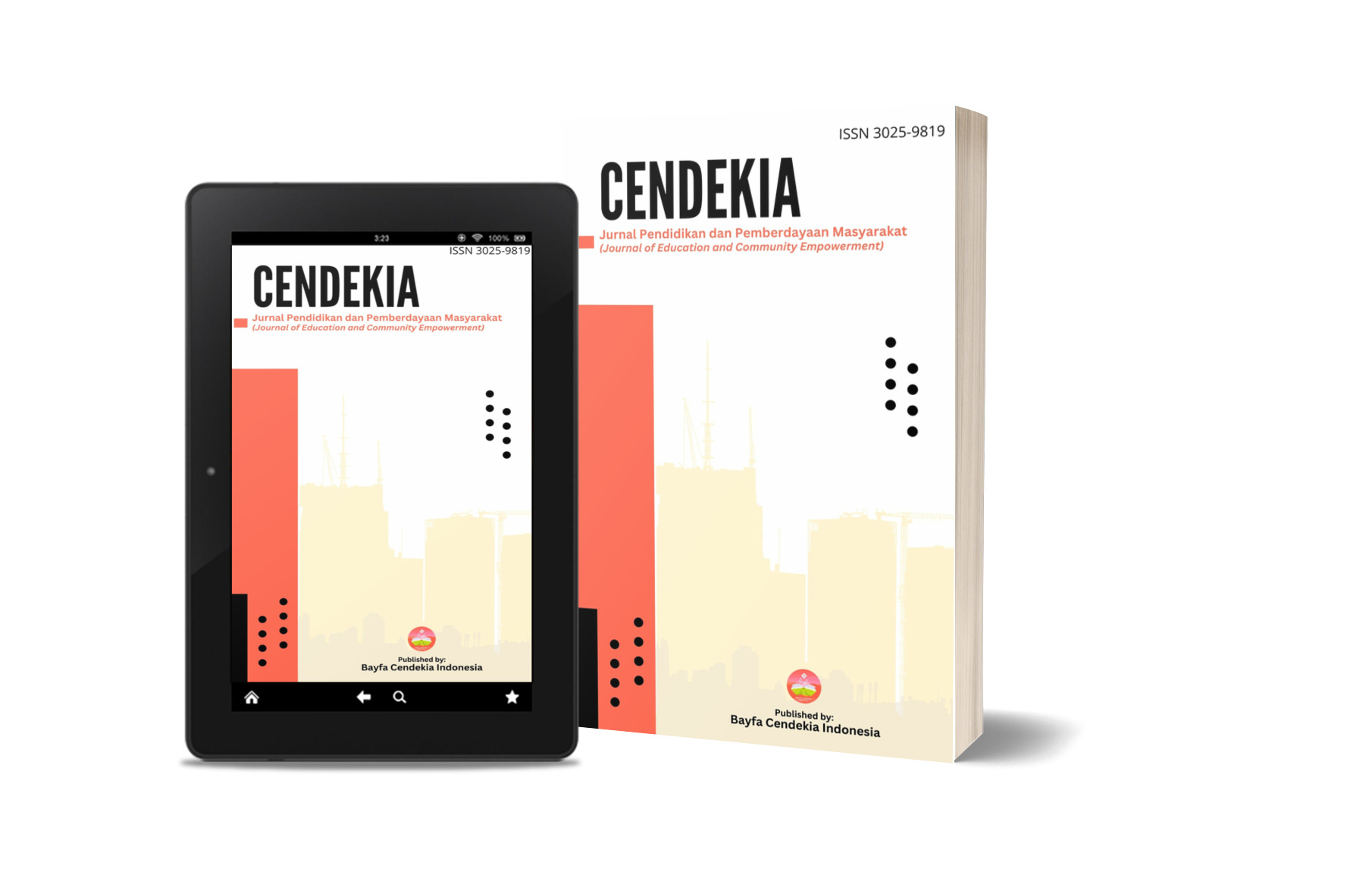
This issue presents a diverse collection of articles exploring innovations in education and learning, particularly through the use of digital media, the development of educational games, and the strengthening of various aspects of literacy. The articles in this issue examine the use of digital learning media to improve Tajwid understanding, the implementation of the Kampung Tajwid game based on local culture, and the development of learning games to address early childhood difficulties in basic reading, writing, and arithmetic skills. In addition, this issue features the application of game-based learning in science education, an exploration of the learning needs of seventh-grade students in Tauhid at Madrasah Diniyah Takmiliyah Awaliyah (MDTA), and efforts to strengthen environmental literacy through a waste classification board game. Overall, this issue highlights the importance of creative, interactive, and contextual learning innovations in improving students’ understanding, engagement, and learning experiences.
USER
ARTICLE TEMPLATE
TOOLS
VISITOR